The 2026 Election Landscape: A Guide Through the Lens of Mike Huckabee
Mike Huckabee offers a unique perspective on the upcoming 2026 elections, particularly regarding Donald Trump’s potential third term and the spiritual implications of the political climate.
He frames the election as a pivotal moment, potentially the last decided by ballots, and actively supports a re-election campaign, despite constitutional concerns.
Huckabee’s commentary also extends to Sarah Huckabee Sanders’ career and the Arkansas election filing period, providing a comprehensive, albeit partisan, guide.
Mike Huckabee, a prominent figure in conservative politics, occupies a unique position as a commentator and strategist, particularly concerning the 2026 election cycle. His background as a former Governor of Arkansas and a Baptist pastor informs his often-provocative analysis of the American political landscape. Currently, he serves as a vocal supporter of Donald Trump, actively engaging in discussions surrounding a potential, and constitutionally questionable, third term for the former President.
Huckabee’s influence extends beyond simple endorsement. He’s positioned himself as a key interpreter of the motivations and strategies driving the current political discourse. He frequently appears on platforms like Fox News, utilizing these appearances to articulate his views and rally support. His recent pronouncements, including heading up Trump’s 2024 re-election campaign, demonstrate a willingness to challenge conventional political norms.
Furthermore, his familial connection to Sarah Huckabee Sanders, the current Governor of Arkansas, adds another layer to his involvement in the 2026 elections. He provides commentary on her political career and the unfolding election dynamics within Arkansas, offering a perspective deeply rooted in the state’s political fabric. His role is not merely observational; he actively shapes the narrative surrounding these events.
The Controversial “Third Term” Argument for Trump
Mike Huckabee has become a leading voice advocating for the possibility of Donald Trump serving a third term as President, a proposition widely considered unconstitutional. This argument centers on Huckabee’s assertion that attempts to remove Trump from office through legal challenges and investigations – specifically referencing actions by James Comey, Democrats, and the media – effectively nullified his first term.
Huckabee contends that these perceived “illegal attempts” to oust Trump justify a re-do, allowing him to run for and potentially serve a third term. He frames this not as a violation of the 22nd Amendment, but as a correction of past injustices. This interpretation, however, lacks legal basis and has been met with significant criticism from legal scholars and political opponents.
He publicly announced his leadership role in a 2024 re-election campaign predicated on this controversial premise, signaling a deliberate effort to challenge established constitutional limits. This stance positions Huckabee as a key figure in pushing a narrative that seeks to circumvent traditional democratic processes and potentially destabilize the established order.
Huckabee’s Claims Regarding Trump’s Eligibility
Mike Huckabee explicitly states that Donald Trump is eligible for a third term, despite the clear limitations imposed by the 22nd Amendment to the U.S. Constitution. His justification doesn’t rest on a reinterpretation of the amendment itself, but rather on a claim that Trump’s initial election was unfairly contested and undermined.
Huckabee repeatedly points to the actions of figures like James Comey, along with what he describes as a coordinated effort by Democrats and the media, as constituting an “illegal attempt” to remove Trump from office. He argues this interference effectively invalidated portions of Trump’s first term, creating a loophole allowing for a subsequent run.
He publicly announced, via social media (X, formerly Twitter), that he would “explain how realDonaldTrump will be eligible for a 3rd term” during a Sean Hannity appearance. This claim, while lacking legal standing, forms the core of his support for a 2024 re-election campaign, positioning Trump as a candidate uniquely entitled to a further term.
Legal Challenges to a Potential Trump Third Term
Despite Mike Huckabee’s assertions, a third term for Donald Trump faces significant, and likely insurmountable, legal hurdles. The 22nd Amendment to the U.S. Constitution explicitly limits a president to two terms in office. While Huckabee frames Trump’s eligibility around alleged interference in his first term, legal scholars widely dismiss this argument as lacking constitutional basis.
Any attempt by Trump to run in 2024, and subsequently serve beyond the traditional two-term limit, would almost certainly be met with immediate legal challenges. These challenges would likely center on the clear language of the 22nd Amendment and established precedents regarding presidential term limits.
State election officials could refuse to place Trump’s name on the ballot, and any successful election would be subject to court review. The Supreme Court would ultimately be tasked with resolving the constitutional question, and a ruling against Trump’s eligibility is widely anticipated given the amendment’s unambiguous wording.
The Historical Context of Presidential Term Limits
The concept of limiting presidential terms isn’t new; it’s deeply rooted in American history, stemming from concerns about the potential for tyranny. George Washington himself voluntarily stepped down after two terms, establishing an informal precedent followed for over 150 years. This tradition arose from fears mirroring those that led to the American Revolution – concentrated power in a single individual.
However, Franklin D. Roosevelt’s four terms in office during the Great Depression and World War II prompted a formalization of term limits. The 22nd Amendment, ratified in 1951, enshrined the two-term limit into the Constitution, explicitly preventing any future president from exceeding that boundary.
This amendment wasn’t without debate, with some arguing it restricted the voters’ choice. Nevertheless, the prevailing sentiment favored safeguarding against the dangers of prolonged executive power. Mike Huckabee’s current arguments attempting to circumvent this established constitutional principle represent a departure from this historical understanding and legal precedent.
Huckabee’s Perspective on the 2024 Election as a Spiritual Battle
Mike Huckabee consistently frames political contests, particularly the 2024 election, not merely as clashes of ideologies, but as fundamental spiritual battles; A Baptist pastor himself, he frequently invokes religious language and themes in his commentary, portraying the election’s outcome as having profound moral and spiritual consequences for the nation.
At the Pray Vote Stand Summit, Huckabee explicitly articulated this view, suggesting the election transcends typical political considerations. He believes the future direction of the country hinges on a spiritual awakening or decline, directly linking the political landscape to divine influence and moral responsibility.
This perspective resonates with a segment of the electorate who view politics through a religious lens, and it informs his staunch support for Donald Trump. Huckabee suggests that opposing forces represent a threat to traditional values and a spiritual foundation of the United States, elevating the stakes beyond policy debates.
The “Ballots or Bullets” Rhetoric and its Implications
Mike Huckabee’s provocative statement – that the 2024 election would be the “last [election] decided by ballots rather than bullets” if Donald Trump lost – ignited significant controversy and raised concerns about the implications of his rhetoric. This stark phrasing suggests a potential for civil unrest or violence should Trump be defeated, particularly given ongoing legal challenges.
The “ballots or bullets” analogy evokes a historical context of political instability and the potential breakdown of democratic processes. Huckabee seemingly implies that if legal avenues to challenge the election results are exhausted, and Trump still loses, the outcome will not be accepted peacefully by his supporters.
Critics argue this type of language is dangerous and irresponsible, potentially inciting violence and undermining faith in the electoral system. While Huckabee likely intended to express the high stakes of the election, the phrasing has been widely interpreted as a veiled threat and a justification for potential unrest. It underscores his deep concern about the future of the country.
Sarah Huckabee Sanders’ Political Career and 2026 Elections
Sarah Huckabee Sanders has rapidly ascended in Arkansas politics, currently serving as the state’s Governor. Her career trajectory, closely watched given her father Mike Huckabee’s prominent political voice, significantly impacts the 2026 election landscape. She formally declared her candidacy during the nine-day filing period, signaling her intent to continue leading the state.
Prior to becoming Governor, Sanders gained national recognition as White House Press Secretary under Donald Trump, a role that honed her communication skills and solidified her position within the Republican party. This experience provides her with a unique platform and network as she navigates the upcoming elections.
Her governorship is being closely scrutinized as a potential stepping stone for higher office, and her performance will undoubtedly influence her future political prospects. Mike Huckabee’s support and commentary add another layer to her political narrative, framing her as a key figure in the conservative movement and a potential leader for the future.
Arkansas Election Filing Period and Key Candidates (2026)
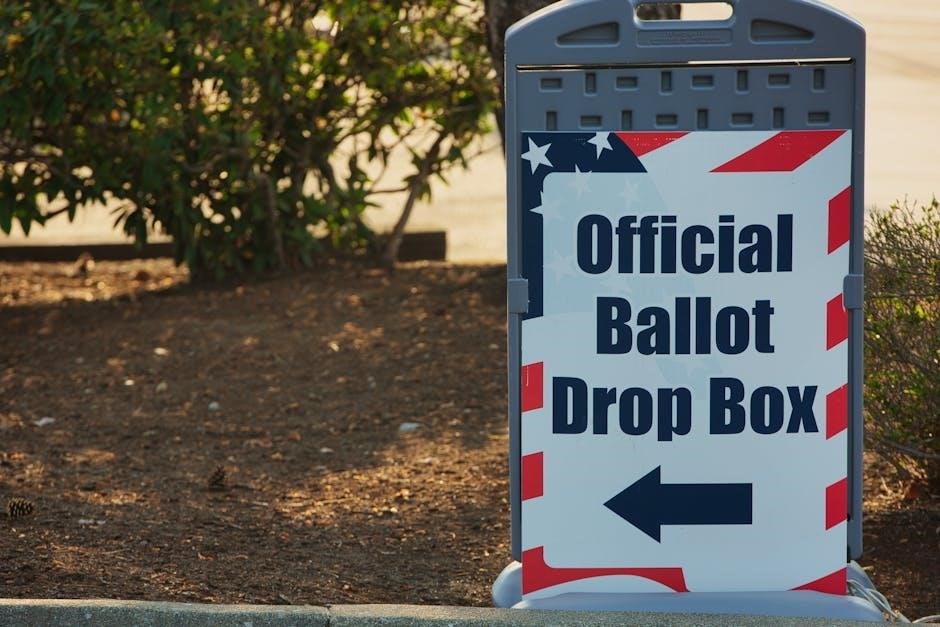
The Arkansas election cycle officially commenced with a bustling filing period at the Capitol rotunda, marking the formal declaration of candidacies for both federal and state seats in the 2026 elections. This nine-day window, a crucial phase in the electoral process, saw numerous individuals stepping forward to contest various positions.
Notably, Governor Sarah Huckabee Sanders filed for re-election, aiming to secure a second term and continue her conservative agenda within the state. U;S. Representative French Hill also entered the race, seeking to retain his seat in Congress and contribute to the national political discourse.
While a comprehensive list of all candidates is still emerging, these early filings indicate a competitive election season. Mike Huckabee’s commentary often touches upon the importance of local races, emphasizing the need for strong conservative representation at all levels of government. The filing period sets the stage for a dynamic campaign season in Arkansas.
Huckabee’s Commentary on the Political Spectrum (Left vs. Right)
Mike Huckabee frequently addresses the traditional political spectrum, often characterizing it as a horizontal divide between “Left versus Right, liberal versus conservative, Democrat versus Republican.” However, he often suggests this framework is overly simplistic and fails to capture the nuances of contemporary political thought.
Huckabee tends to position himself firmly on the right, advocating for conservative principles rooted in faith and traditional values; He often critiques what he perceives as the excesses of the left, particularly regarding social and cultural issues. His commentary frequently highlights a perceived moral decline and the importance of restoring traditional norms.
He doesn’t necessarily dismiss the left entirely, but frames their positions as fundamentally opposed to his own worldview. This perspective informs his analysis of elections and political events, consistently emphasizing the importance of conservative leadership and policies. He views the political landscape as a battle for the soul of the nation.
The Influence of Comey, Democrats, and Media on Trump’s Candidacy (According to Huckabee)
Mike Huckabee consistently argues that Donald Trump’s candidacy and subsequent presidency were unfairly targeted by a coordinated effort involving James Comey, the Democratic Party, and the mainstream media. He believes these entities engaged in “illegal attempts” to undermine Trump, starting even before his election.
Huckabee specifically points to Comey’s actions during the 2016 election, alleging they were politically motivated and designed to damage Trump’s chances. He views the subsequent investigations into Russian interference as a pretext for a broader effort to delegitimize Trump’s presidency. He frames the media as actively participating in this effort, portraying Trump negatively and amplifying critical narratives.
According to Huckabee, this perceived conspiracy justifies Trump’s potential pursuit of a third term, as the initial attempts to remove him from office were illegitimate. He believes Trump is owed a fair opportunity to continue leading, unburdened by these past attacks. This narrative is central to his support for a 2024 re-election campaign.
Huckabee’s Media Presence and Political Commentary (Fox News Appearances)
Mike Huckabee maintains a significant media presence, frequently appearing on Fox News to offer political commentary. His appearances serve as a key platform for disseminating his views on current events, particularly concerning the 2024 and 2026 elections and Donald Trump’s political future.
He utilizes these opportunities to articulate his arguments regarding Trump’s eligibility for a third term, often referencing the alleged injustices perpetrated by James Comey, Democrats, and the media. His commentary is characterized by strong support for Trump and a critical stance towards the opposing political forces.
Huckabee’s regular presence on Fox News allows him to reach a large and receptive audience, reinforcing his narrative and shaping public opinion. He often teases upcoming appearances, like his scheduled discussion with Sean Hannity, to amplify his message and generate further engagement. His media strategy is integral to his influence within the conservative sphere;
Analyzing Huckabee’s Messaging Strategy
Mike Huckabee’s messaging strategy centers on framing the 2024/2026 elections as a critical juncture for the nation, often employing emotionally charged rhetoric. He consistently portrays the election not merely as a political contest, but as a “spiritual battle,” appealing to the faith-based values of his audience.
A core element of his strategy involves questioning the legitimacy of potential outcomes if Donald Trump were to lose, hinting at the possibility of societal unrest – the “ballots or bullets” scenario. This messaging aims to galvanize support for Trump and delegitimize any opposition victory;
Huckabee frequently utilizes accusations of unfair treatment towards Trump, blaming James Comey, Democrats, and the media for attempting to undermine his presidency. This narrative positions Trump as a victim of a biased system, fostering sympathy and reinforcing loyalty among his supporters. His strategy relies heavily on appealing to pre-existing grievances and anxieties within the conservative base.
The Role of Faith and Religion in Huckabee’s Political Views
Mike Huckabee’s political views are deeply intertwined with his Christian faith, specifically his Baptist background. He frequently integrates religious language and themes into his political commentary, viewing the political landscape through a moral and spiritual lens. This is evident in his description of the 2024 election as a “spiritual battle,” elevating the contest beyond mere policy differences.
His faith informs his conservative stances on social issues and his strong support for traditional values. He often frames political debates as clashes between good and evil, appealing to the religious convictions of his audience. This approach allows him to connect with voters on a deeper, emotional level.
Huckabee’s participation in events like the Pray Vote Stand Summit underscores the centrality of faith in his political engagement. He believes that Christians have a moral obligation to participate in the political process and advocate for policies aligned with their beliefs, shaping his overall messaging strategy.
Huckabee’s Stance on Key Policy Issues
While specific detailed policy positions aren’t extensively outlined in the provided sources, Mike Huckabee consistently demonstrates a conservative stance across a range of issues; He generally advocates for limited government intervention, lower taxes, and a strong national defense. His support for Donald Trump suggests alignment with policies focused on economic nationalism and border security.
Huckabee’s faith-based worldview heavily influences his positions on social issues, leading to strong opposition to abortion and support for traditional family values. He often critiques what he perceives as liberal overreach and cultural decay, framing these concerns as threats to American society.
His commentary frequently centers on perceived attacks against conservative principles by the media, Democrats, and figures like James Comey. While not explicitly detailed, his rhetoric implies support for policies that prioritize religious freedom and individual liberty, reflecting a consistent conservative ideology.
Potential Impact of Huckabee’s Endorsements and Support
Mike Huckabee’s vocal support for Donald Trump’s potential third term, despite constitutional questions, carries significant weight within the Republican base, particularly among evangelical voters. His endorsement lends credibility to the narrative of a stolen election and fuels the argument for Trump’s eligibility, potentially mobilizing a dedicated segment of the electorate.
Huckabee’s media presence, including appearances on Fox News, amplifies his message to a large audience, shaping public opinion and reinforcing existing beliefs. His framing of the 2024 election as a “spiritual battle” resonates with religiously conservative voters, potentially increasing turnout.
Furthermore, his influence within Arkansas politics, as the father of Sarah Huckabee Sanders, could impact state-level elections and rally support for conservative candidates. While not a kingmaker, Huckabee’s endorsements and commentary demonstrably influence the Republican landscape and contribute to the broader political discourse.
The Future of the Republican Party: Huckabee’s Vision
Mike Huckabee’s vision for the Republican Party centers on a return to conservative principles, deeply intertwined with faith and traditional values. He views the party’s future as reliant on embracing its base – particularly evangelical Christians and working-class voters – and resisting the pressures of political correctness.
Huckabee advocates for a more populist approach, echoing Donald Trump’s rhetoric and challenging the established political order. He believes the party must remain steadfast in its opposition to liberal ideologies and actively combat what he perceives as biased media coverage and “illegal attempts” to undermine conservative leaders.
His perspective suggests a Republican Party less focused on appealing to moderate voters and more committed to solidifying its core constituency. This vision, fueled by concerns over election integrity and a perceived cultural war, positions the party for continued polarization and a potentially combative future.
Navigating the 2026 Election with Informed Perspectives

Analyzing the 2026 election landscape through Mike Huckabee’s lens reveals a deeply partisan perspective, characterized by concerns over election integrity and a strong defense of conservative values. His commentary, frequently shared via platforms like Fox News, emphasizes a spiritual dimension to the political battle, framing it as a fight for the nation’s soul.
Understanding Huckabee’s viewpoints – including his support for a potential third Trump term and his criticisms of the media and Democrats – is crucial for navigating the complex narratives surrounding the election. However, it’s equally important to recognize his inherent bias and seek diverse sources of information.
Ultimately, informed participation requires critical evaluation of all perspectives, including those offered by influential figures like Huckabee, to form independent judgments and contribute to a healthy democratic process. The Arkansas filing period signals the start of a crucial cycle.